

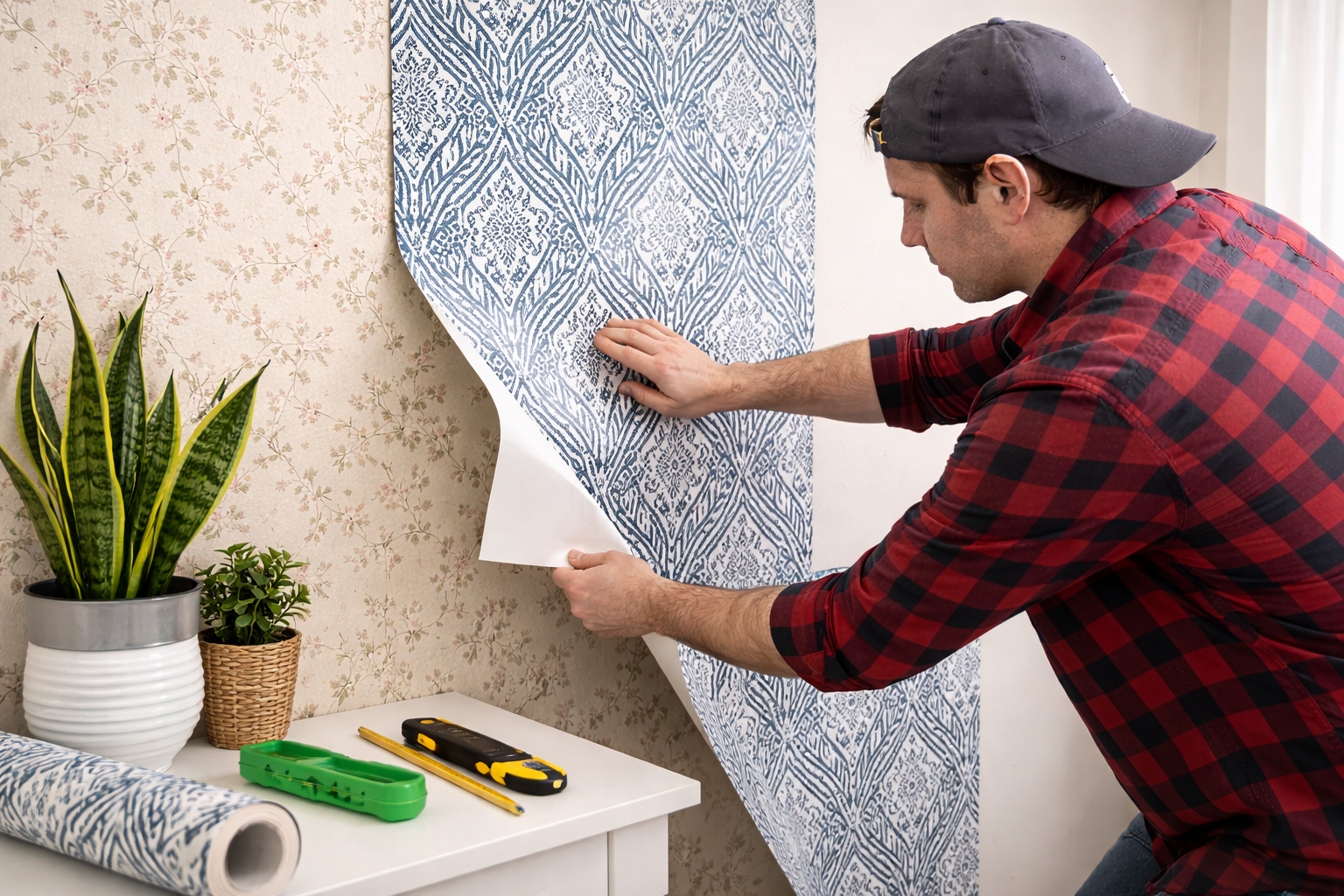
Peel and stick wallpaper has become a favorite solution for quick home upgrades. Many homeowners want to refresh a room without removing old wallpaper, which can feel messy and time-consuming.
You can apply peel and stick wallpaper over existing wallpaper in many cases, but success depends on wall condition, wallpaper type, preparation, and environment. This guide explains what works, what fails, and how to get long-lasting results without bubbles, peeling, or pattern show-through.
Key Takeaways
- Peel and stick works best on smooth wallpaper
- Primer greatly improves adhesion
- Texture and damage cause failure
- Dark patterns may show through thin wallpaper
- Proper prep extends lifespan
- Removal is usually safe and damage-free
Ready to transform your space? Our complete VJ panelling guide reveals installation secrets, design tricks, and style inspiration for creating stunning living rooms and bedrooms that captivate.
Can you apply peel and stick wallpaper over existing wallpaper?
Yes, you can apply peel and stick wallpaper over existing wallpaper if the old wallpaper is smooth, well-adhered, and not textured or damaged. Flat paper-based or vinyl wallpaper that firmly sticks to the wall works best. Loose seams, peeling corners, or heavy textures will reduce adhesion and cause failure over time.
What types of existing wallpaper work best for peel and stick overlay?
Smooth and sealed wallpapers provide the best surface for peel and stick products.
Best options include:
- Vinyl wallpaper in good condition
- Flat paper wallpaper with no texture
- Painted-over wallpaper with sealed edges
Poor options include:
- Fabric-backed wallpaper
- Grasscloth or linen wallpaper
- Heavily textured or embossed wallpaper
| Existing Wallpaper Type | Peel & Stick Compatibility |
| Smooth vinyl | Excellent |
| Painted wallpaper | Very good |
| Light paper wallpaper | Good |
| Textured wallpaper | Poor |
| Fabric/grasscloth | Not recommended |
How do you prepare walls for peel and stick over existing wallpaper?
Preparation is the most important step for long-term adhesion.
Essential preparation steps:
- Clean the surface with mild soap and water
- Remove grease, dust, and residue
- Secure loose seams with wallpaper adhesive
- Let walls dry completely
- Lightly sand raised areas if needed
Skipping the preparation steps often leads to bubbles, peeling, or edges lifting within weeks.
Should you prime old wallpaper before peel and stick installation?
Priming is highly recommended, especially if the old wallpaper is porous or slightly textured. A clear or white adhesion primer creates a uniform surface and improves grip.
Benefits of priming:
- Prevents pattern bleed-through
- Improves adhesive strength
- Helps wallpaper last longer
- Reduces risk of peeling
Can you install a peel and stick over textured or damaged wallpaper?
Installing a peel and stick over a textured or damaged wallpaper is risky and usually fails. Texture creates air gaps, while damage prevents proper adhesion.
If there is any texture, sand lightly to reduce raised patterns. Apply a liner paper or skim coat and don’t forget to prime before installation. If the texture is heavy, it is best that you remove it completely and take a fresh start.
Will the old pattern show through peel and stick wallpaper?
Yes, old patterns can show through if the new wallpaper is thin or light-colored.
Pattern bleed-through happens when:
- The new wallpaper is light or semi-transparent
- The old wallpaper has dark or bold designs
- The wall lacks primer
How to prevent it:
- Choose thicker peel and stick wallpaper
- Use darker or patterned designs
- Prime the wall before installation
Does peel and stick adhere well long-term over wallpaper?
Peel and stick wallpaper can last 3–5 years or longer over existing wallpaper when installed correctly. Longevity depends on surface condition, humidity, and preparation.
Factors that improve lifespan:
- Smooth surfaces
- Primer use
- Stable indoor temperatures
- Low humidity rooms
How long does peel and stick last when applied over existing wallpaper?
On ideal surfaces, peel and stick wallpaper can last up to 7 years. In high-moisture areas like bathrooms, lifespan may reduce to 1–3 years.
| Environment | Expected Lifespan |
| Living room | 5–7 years |
| Bedroom | 4–6 years |
| Kitchen | 2–4 years |
| Bathroom | 1–3 years |
Can peel and stick wallpaper over existing wallpaper cause bubbles or peeling?
Yes, bubbles and peeling often occur due to trapped air, dust, or uneven surfaces.
Common causes:
- Poor surface cleaning
- Uneven wallpaper seams
- Fast installation
- Humidity during application
Quick fixes:
- Smooth with a plastic squeegee
- Pop air bubbles with a pin
- Press edges firmly with heat from a hair dryer
Why does peel and stick wallpaper fail to adhere over existing wallpaper?
It is very common but you can avoid it by paying attention to details and by priming the surface correctly. Adhesion fails due to:
- Dust or grease
- Loose old wallpaper
- Textured surfaces
- Cold or humid rooms
- Low-quality peel and stick material
Correcting these issues before installation is a great idea.
How do you remove peel and stick applied over existing wallpaper?
Removal is usually simple and damage-free when done slowly. It is best to start from one corner. Peel slowly at a low angle and make sure your hand is steady and smooth. Use mild heat if it is harder to remove as it helps in the peeling process. However, avoid pulling too fast because it can tear the paper and then it might get difficult for you to find the end to peel from.
Does peel and stick wallpaper damage the old wallpaper when removed?
In most cases, it does not damage well-adhered wallpaper. Damage may occur if the old wallpaper was already loose, thin, or poorly installed.
Will peel and stick stick to vinyl wallpaper underneath?
Yes, peel and stick adheres well to vinyl wallpaper if the surface is clean and not glossy. Light sanding and priming improve results on slick vinyl finishes.
Is it safe to put peel and stick wallpaper over textured wallpaper?
It is generally not safe or reliable without smoothing the surface first. Texture creates gaps that reduce adhesive contact and cause early peeling.
How do you fix seams showing through peel and stick over old wallpaper?
Visible seams usually appear when old wallpaper overlaps or lifts.
Some of the best solutions are:
- Sanding raised seams
- Applying seam sealer
- Using thicker peel and stick wallpaper
- Aligning seams away from visible areas
Does the old wallpaper pattern bleed through peel and stick?
Yes, especially with thin wallpaper. Primer and thicker designs prevent this issue. Therefore, you should always invest in a premium quality wallpaper so that you get the true value for money. You buy it once and it lasts you for years, only if you maintain it well.
Can moisture or humidity ruin peel and stick over wallpaper?
Yes, moisture weakens adhesive strength. Bathrooms and kitchens require extra care.
Moisture protection tips:
- Use primer
- Ensure proper ventilation
- Avoid installation during high humidity
FAQs
Can peel and stick wallpaper be reused?
Some brands allow reuse, but adhesion weakens after removal.
Is peel and stick good for renters?
Yes, it’s renter-friendly when applied over stable surfaces.
Can I use peel and stick in bathrooms?
Yes, but expect a shorter lifespan due to humidity.
Does peel and stick damage drywall underneath wallpaper?
If it is removed properly, it doesn’t damage the drywall underneath.
Conclusion
Should you apply peel and stick wallpaper over existing wallpaper? Peel and stick wallpaper works well over existing wallpaper when the surface is smooth, clean, primed, and stable. It saves time, avoids mess, and allows easy design updates. However, textured, damaged, or loose wallpaper requires extra preparation or removal.