

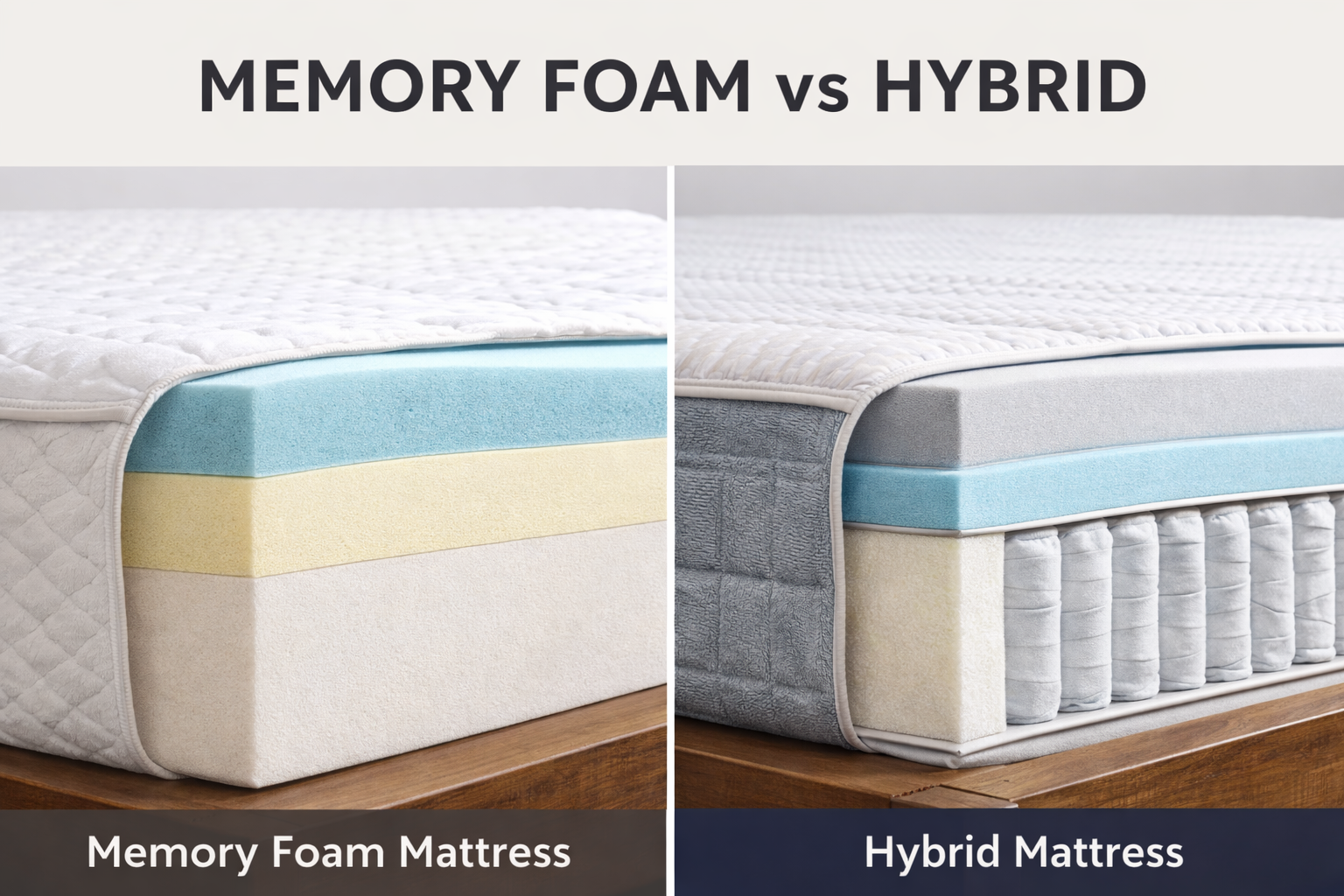
Choosing the right mattress makes a big difference in how you sleep, how your back feels, and how cool you stay at night. Memory foam mattresses hug your body and reduce pressure points. Hybrid mattresses combine foam and coils for support and airflow.
Both feel different and work best for different needs. If you struggle with back pain, sleep hot, or want deep, restful sleep, this comparison helps you decide.
We break down comfort, support, cooling, durability, and which mattress fits your sleep style. By the end, you’ll know which type fits your body, climate, and budget.
Key Takeaways
- Memory foam contours your body and reduces pressure points.
- Hybrid mattresses combine coils and foam for balanced support and airflow.
- For back pain, hybrids tend to keep your spine more aligned.
- For cooling, hybrids usually sleep cooler than memory foam.
- Memory foam isolates motion better for couples.
- Durability depends on materials more than type.
- Budget options exist for both, but quality often costs more.
- Try mattresses with solid trial periods before buying.
What You Need to Know Before Choosing
What Is a Memory Foam Mattress?
A memory foam mattress uses dense foam layers that contour to your body. It responds to heat and weight to cradle your curves. This reduces pressure on shoulders and hips. Many memory foam designs use multiple foam layers for comfort and support. Most are all-foam with no coils inside.
What Is a Hybrid Mattress?
A hybrid mattress combines foam layers with an innerspring coil layer. The coils add bounce and lift. The foam layers add comfort and body contouring. This mix aims to offer the best of both worlds: support from coils, comfort from foam. Hybrids vary in how much foam and coil they use.
Comfort & Support: How They Feel
Memory Foam Comfort and Support
Memory foam feels slow and hugging. You feel “sunk in” rather than “on top.”
It works well for people who want pressure relief. Side sleepers often love this feel. Memory foam supports curves and helps joints relax.
However, some people feel trapped or hard to move on an all-foam surface. This is because memory foam slows down your bounce.
Hybrid Comfort and Support
Hybrid mattresses feel more balanced. They cushion your body but also hold it up.
The coils give push-back, so you don’t sink as much. Many sleepers feel like they sleep “on” the mattress, not “in” it.
Hybrids suit back and stomach sleepers well. They help the spine stay aligned without too much sink.
Back Pain: Which Is Best?
How Memory Foam Helps Back Pain
Memory foam contours to your body. It spreads your weight evenly. This can reduce stress on the lower back. People with back pain often feel relief when pressure points soften.
If your pain comes from uneven support, memory foam can help. However, if the mattress is too soft, your back can droop, causing discomfort. A medium-firm foam mattress often works best.
How Hybrid Mattresses Help Back Pain
Hybrids combine support and comfort. The coil layer keeps your spine aligned. The foam layers cushion your body.
For many people with back issues, hybrids offer enough firmness without feeling too stiff. They help keep hips and shoulders in line with the rest of your body. Many back pain specialists recommend slightly firmer hybrid mattresses for proper alignment.
Cooling & Temperature Control
Memory Foam and Heat Retention
Memory foam can trap heat. Your body heat can stay near the surface. Older foam models often sleep hot. Newer models add cooling gel, open-cell foam, or airflow channels to fix this.
Still, memory foam generally sleeps warmer than hybrid models because foam holds heat.
How Hybrid Mattresses Sleep Cooler
Hybrid mattresses sleep cooler by design. The coil layer allows air to flow up and down. This moves heat away from your body. The foam on top may still warm a bit, but the coils help keep the temperature regulated.
If you sleep hot or live in a warm climate, a hybrid mattress tends to be cooler.
Motion Transfer & Partner Disturbance
Memory Foam and Motion Isolation
Memory foam excels at reducing motion transfer. If your partner moves at night, you likely won’t feel it as much. Foam absorbs movement instead of transferring it.
This makes memory foam a good choice for couples, light sleepers, or those easily disturbed by motion.
Motion Transfer in Hybrid Mattresses
Hybrids can also reduce motion, but not as much as all-foam mattresses. The coils may transmit some movement. Higher-quality hybrids with thick foam layers on top help absorb motion better.
Couples who move a lot still do fine on hybrids, but memory foam has the edge here.
Durability & Lifespan
Memory Foam Durability
- Memory foam lasts long if it uses high-density foam.
- Lower-density foam can sag or soften quickly.
- A good quality memory foam mattress can last 7–10 years.
- Always check density ratings when shopping. Higher density usually means longer life.
Hybrid Mattress Durability
- Hybrid mattresses also last around 7–10 years.
- Coils can make them more durable than foam alone. High-quality coils resist sagging.
- However, the foam top layers still affect overall lifespan.
- In many cases, high-end hybrids outlast mid-range foam mattresses.
Price Comparison
Memory Foam Price Range
Memory foam mattresses range widely. Budget models start around $300–$500.
Mid-range options $700–$1,200. Premium memory foam with advanced cooling can go $1,500+.
You can find good memory foam mattresses at lower prices, but quality and durability improve with cost.
Hybrid Mattress Price Range
Hybrids typically cost more than all-foam.
Entry-level hybrids often start around $800–$1,200. Mid-range $1,300–$2,000. Premium hybrids can go $2,500+.
The coil systems and foam quality raise the price.
Price Comparison Table
| Mattress Type | Starting Price | Mid-Range | Premium |
| Memory Foam | $300 | $700–$1,200 | $1,500+ |
| Hybrid | $800 | $1,300–$2,000 | $2,500+ |
Weight & Movement Considerations
How Memory Foam Feels When You Move
Memory foam has slow response. You may feel “stuck” when you shift positions. Heavy sleepers sometimes find this tiring. However, the pressure relief can outweigh that feel.
How Hybrid Mattresses Perform with Movement
Hybrid feels more responsive. You don’t feel stuck. You can change positions easily. This makes hybrids friendlier for people who toss and turn.
Suitability by Sleep Position
| Sleep Position | Best Fit |
| Side Sleepers | Memory Foam, Soft-Medium hybrids |
| Back Sleepers | Medium-Firm Hybrid, Medium Foam |
| Stomach Sleepers | Firmer Hybrid |
| Combination Sleepers | Responsive Hybrid |
What About Edge Support?
Edge Support in Memory Foam
Memory foam edges can sink, making it feel smaller. Firm edge foam or reinforced bases help, but hybrids usually offer stronger edges.
Edge Support in Hybrids
Hybrid mattresses usually have coil support around the perimeter. This gives you a stable edge you can sit or sleep on without sinking.
Other Factors to Consider
Motion Isolation for Couples
Memory foam wins slightly for motion isolation. Hybrids do well with thicker foam layers.
Allergies & Dust Mites
Both mattress types can be hypoallergenic. Choose covers that resist dust and mites. Regular cleaning helps both sleep clean and fresh.
Warranty & Trial Periods
Look for long warranties and trial periods. Many brands offer 100–365 night sleep trials. A long trial lets you test comfort before you commit.
Frequently Asked Questions
1. Which mattress is best for back pain?
Many experts prefer a medium-firm hybrid because it supports the spine while offering comfort.
2. Do memory foam mattresses sleep hot?
Traditional foam can trap heat, but many modern memory foam mattresses use cooling gel or breathable foam to help regulate temperature.
3. Is a hybrid mattress good for couples?
Yes. Hybrids offer support and airflow, and many reduce motion with thick foam layers.
4. How long should a mattress last?
Most quality memory foam or hybrid mattresses last 7–10 years with normal use.
5. Can I use a mattress topper to adjust feel?
Yes. A mattress topper can soften or firm up a mattress depending on your needs.
Conclusion
Choosing between a memory foam and a hybrid mattress depends on how you sleep, how your body feels, and how warm or cool you prefer your bed. Memory foam works best for pressure relief and motion control, while hybrid mattresses offer stronger support, better airflow, and easier movement. Back pain, sleep position, and temperature sensitivity should guide your choice.
We believe the right mattress improves sleep quality, comfort, and long-term health. Take time to assess your needs, test different firmness levels, and invest in a mattress that supports restful, pain-free sleep every night.