

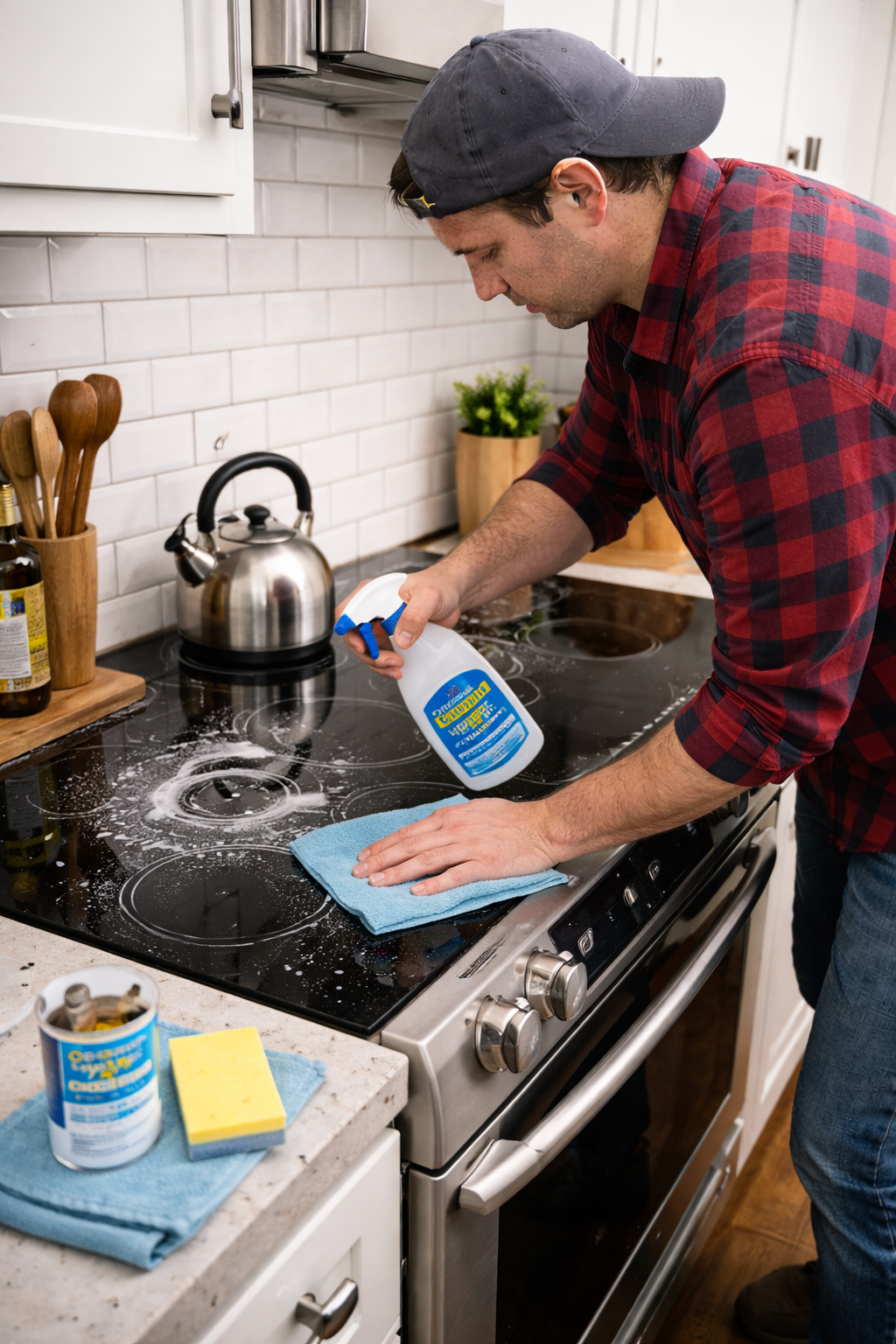
A glass stovetop looks sleek and modern, but keeping it clean can feel intimidating. Burnt spills, grease splatters, and cloudy streaks can quickly ruin its polished look if not handled properly. The good news is that cleaning a glass stovetop is easier than most people think, if you use the right method and tools.
This guide walks you through how to clean a glass stovetop safely and effectively, remove stubborn burnt-on food, avoid scratches, and keep it shining for years.
Key Takeaways
- Glass stovetops need gentle, non-abrasive cleaning
- Daily wiping prevents stubborn stains
- Baking soda and vinegar remove burnt-on food safely
- Glass-safe scrapers are effective when used properly
- Avoid steel wool, harsh chemicals, and dry scraping
- Regular maintenance keeps the surface shiny and damage-free
Why Do Glass Stovetops Need Special Care?
Glass stovetops are made from ceramic glass designed to withstand high heat, but they can still scratch, stain, or crack if cleaned incorrectly. Unlike traditional gas burners, spills sit directly on the surface and burn onto the glass, making gentle but thorough cleaning essential.
Improper cleaners, abrasive scrubbers, or sharp tools can permanently damage the surface, so knowing what not to use is just as important as knowing what works.
What You’ll Need to Clean a Glass Stovetop?
Before you start, gather the right tools:
Safe cleaning supplies
- Microfiber cloths or soft sponges
- Dish soap
- White vinegar
- Baking soda
- Commercial glass cooktop cleaner (optional)
- Plastic scraper or razor scraper designed for glass stovetops
Avoid
- Steel wool
- Abrasive scouring pads
- Powder cleaners not meant for glass
- Harsh chemical cleaners like bleach or ammonia
Using the right tools prevents scratches and dullness.
Step-by-Step: How to Clean a Glass Stovetop Daily
Step 1: Let the Stovetop Cool Completely
Never clean a hot glass stovetop. Sudden temperature changes can crack the glass and cleaning products can burn onto the surface.
Step 2: Wipe Away Loose Debris
Use a dry microfiber cloth to remove crumbs, dust, or loose food particles. This prevents dragging debris across the surface while cleaning.
Step 3: Apply a Gentle Cleaner
Mix a few drops of dish soap with warm water or spray white vinegar directly onto the stovetop. Both cut through grease without damaging the glass.
Step 4: Wipe Gently
Using a soft sponge or microfiber cloth, wipe the surface in circular motions. Focus on areas around burners where spills are common.
Step 5: Rinse and Dry
Wipe again with a clean damp cloth to remove residue, then dry with a microfiber cloth to avoid streaks.
This simple routine keeps your stovetop clean with minimal effort.
How to Remove Burnt-On Food from a Glass Stovetop?
Burnt spills happen to everyone. The key is patience, not force.
Method 1: Baking Soda and Vinegar
- Sprinkle baking soda over the burnt area
- Spray white vinegar on top
- Let it fizz and sit for 10–15 minutes
- Wipe gently with a damp microfiber cloth
This method softens burnt residue without scratching.
Method 2: Baking Soda Paste
For tougher stains:
- Mix baking soda with a few drops of water to make a paste
- Spread it over the burnt spots
- Let it sit for 20 minutes
- Wipe clean with a soft cloth
Method 3: Glass Stovetop Scraper
If residue remains:
- Hold a glass-safe scraper at a 45-degree angle
- Gently scrape the burnt food away
- Never dig or press too hard
This is one of the safest and most effective ways to remove stubborn buildup.
Here we have another to informational guide on how to clean a cast iron skillet, don’t miss-out.
Glass Stovetop Maintenance Guide
How to Clean Grease and Oil Splatter?
Grease can create a cloudy film over time.
Best method
- Spray white vinegar on the surface
- Let it sit for 2–3 minutes
- Wipe with a microfiber cloth
Vinegar cuts through grease and restores shine without residue.
How to Make a Glass Stovetop Shine?
After cleaning, polishing helps restore that brand-new look.
Polishing options
- Commercial glass cooktop polish
- A drop of olive oil buffed lightly with a microfiber cloth
Use very little product. Too much can attract dust and streaks.
Common Mistakes to Avoid
Many glass stovetop issues come from cleaning mistakes:
- Scrubbing with steel wool or rough pads
- Using abrasive powder cleaners
- Cleaning while the surface is hot
- Letting spills sit for days
- Sliding heavy cookware across the surface
Avoiding these habits significantly extends the life of your stovetop.
How Often Should You Clean a Glass Stovetop?
- Daily: Quick wipe after cooking
- Weekly: Deep clean with baking soda or vinegar
- Monthly: Polish to maintain shine
Consistent light cleaning prevents heavy buildup and reduces scrubbing.
How to Prevent Stains and Burn Marks?
Prevention saves time and effort.
Helpful tips
- Wipe spills immediately after cooking
- Use flat-bottom cookware
- Avoid dragging pots and pans
- Clean sugar or syrup spills right away (they can permanently damage glass)
- Use cookware recommended by the manufacturer
Can You Use Commercial Glass Stovetop Cleaners?
Yes, but choose products specifically designed for glass or ceramic cooktops. These cleaners often contain mild abrasives safe for glass and leave a protective layer that helps prevent future stains.
Always follow the manufacturer’s instructions and avoid mixing cleaners.
How to Clean White or Cloudy Marks?
White marks usually come from mineral deposits or overheated cookware.
- Apply white vinegar
- Let it sit for 5 minutes
- Wipe clean and polish
For stubborn marks, a commercial cooktop cleaner works best.
Is It Safe to Use Razor Blades on Glass Stovetops?
Yes, if they are specifically designed for glass cooktops and used correctly. However, keep the following safety tips in mind.
- Keep blade flat at a 45-degree angle
- Never scrape dry surfaces
- Avoid chipped or damaged blades
Improper use can scratch or gouge the glass.
How to Clean Around Burner Outlines?
Burner outlines can trap residue.
- Use a soft toothbrush or microfiber cloth
- Apply baking soda paste
- Gently scrub along the outline
This prevents discoloration and buildup.
Eco-Friendly Glass Stovetop Cleaning Options?
If you prefer natural cleaning:
- Baking soda
- White vinegar
- Lemon juice (for light stains)
- Hot water and microfiber cloth
These options are safe, affordable, and effective.
FAQs
Can I use Windex on a glass stovetop?
It’s not recommended. Ammonia-based cleaners can leave streaks and damage protective coatings.
Why does my glass stovetop look cloudy?
Cloudiness on kitchen glass stovetop usually comes from grease buildup, mineral deposits, or cleaner residue.
Can scratches be removed from a glass stovetop?
Minor scratches may be reduced with polish, but deep scratches are permanent.
Is baking soda safe for glass stovetops?
Yes, when used gently and rinsed thoroughly.
How do I clean melted plastic on a glass stovetop?
Turn the burner off, let it cool slightly, then carefully scrape with a glass-safe scraper.
Conclusion
Cleaning a glass stovetop doesn’t have to be stressful. With the right cleaning tools, gentle cleaners, and consistent kitchen care, you can keep your cooktop spotless and scratch-free. Simple habits like wiping spills promptly, using baking soda for deep cleaning, and avoiding abrasive tools make a big difference over time.
A clean glass stovetop not only looks beautiful but also performs better and lasts longer, making your kitchen feel fresh, functional, and inviting every day.